
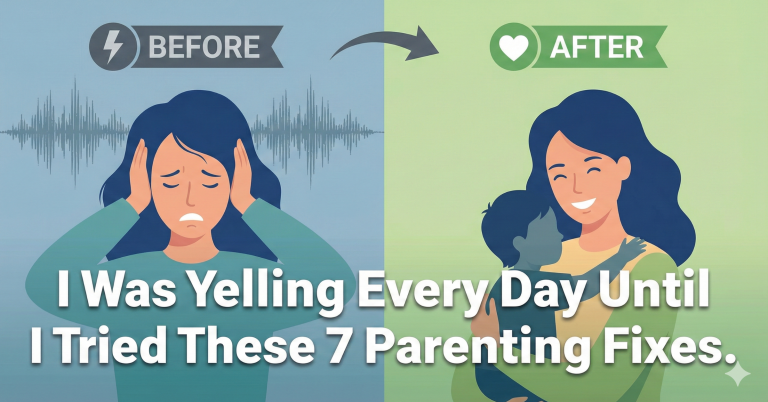

If you’re reading this, chances are you’re tired — not just physically, but emotionally too. I was there. Every morning started with reminders, every evening ended in shouting, and somewhere in between I kept asking myself, “Why is my child not listening to me at all?” I hated yelling. My child hated being yelled at. Yet it kept happening every single day. What changed everything wasn’t stricter rules or louder voices. It was 7 simple parenting fixes that actually worked — not overnight, but steadily. If yelling has become your default, even though you don’t want it to be, this is for you.
Why Parents End Up Yelling (Even When We Don’t Want To)
Yelling usually isn’t about anger. It’s about helplessness. Parents yell when they’ve repeated themselves too many times, feel ignored or disrespected, are exhausted and overwhelmed, or don’t know what else to do. Most of us were raised with yelling, so when stress rises, our brain goes into autopilot mode. The good news is kids don’t stop listening because parents are bad — they stop listening because something in the communication is broken, and that’s exactly what these fixes repair.
Parenting Fix #1: I Stopped Giving Instructions from Another Room
Earlier, I would shout instructions like “Brush your teeth” or “Finish your homework” from the kitchen or bedroom. Children don’t respond well to disconnected voices. What worked instead was walking up to my child, getting down to eye level, and saying the instruction calmly just once. Presence worked better than volume.
Parenting Fix #2: I Reduced Instructions
I realized I was giving too many commands throughout the day. For kids, constant instructions feel like constant pressure. I chose three non-negotiables — safety, respect, and routine — and let go of minor issues. When children aren’t constantly controlled, they listen better when it actually matters.
Parenting Fix #3: I Stopped Asking Questions I Didn’t Mean
I used to say things like “Will you please clean your room?” or “Can you stop watching TV now?” even though I didn’t really mean it as a question. When kids say no and parents yell after that, it creates confusion and defensiveness. I switched to clear, calm statements like “It’s time to clean your room now” and then paused without repeating. Clarity reduced conflict.
Parenting Fix #4: I Gave Choices Instead of Orders
Children crave autonomy. Instead of ordering, I offered acceptable choices such as “Do you want to do homework before snacks or after snacks?” Both options worked for me. This simple change reduced resistance, increased cooperation, and made my child feel respected.
Parenting Fix #5: I Fixed My Timing
Kids don’t listen when they are hungry, sleepy, overstimulated, or deeply focused on play or screens. Earlier, I blamed behavior. Later, I understood that timing matters more than tone. I started giving five-minute warnings, avoided instructions during emotional overload, and chose calm moments for important conversations.
Parenting Fix #6: I Modeled the Behavior I Wanted
I wanted my child to speak calmly, listen patiently, and show respect, but I wasn’t always doing that myself. Children learn more from how we behave than from what we say. I worked on lowering my voice, listening fully, and apologizing when I lost control. That honesty softened our relationship.
Parenting Fix #7: I Focused on Connection Before Correction
When connection is weak, correction doesn’t work. Instead of correcting first, I focused on connection by spending 10 to 15 minutes of undivided attention each day — playing, talking, or listening without teaching or correcting. As connection improved, listening followed naturally.
What I Stopped Doing
I stopped repeating instructions endlessly, threatening without follow-through, comparing my child with others, labeling behavior, and expecting adult-level self-control from a child. Behavior improved when pressure reduced.
How Long Did It Take to See Results?
Not instantly, but within one week there were fewer power struggles, within two to three weeks cooperation improved, and within a month the home felt calmer. Consistency mattered more than perfection.
A Note for Parents Feeling Guilty
If you’ve yelled at your child before, you are not a bad parent. You’re a human parent. Parenting doesn’t come with a manual. What matters is awareness and willingness to change. Children don’t need perfect parents; they need present, learning parents.
Frequently Asked Questions
Is yelling harmful to children? Occasional yelling won’t damage a child, but frequent yelling can affect emotional safety and listening behavior over time. Can gentle parenting really work? Yes, when combined with clear boundaries and consistency, gentle parenting improves cooperation. What if my child still doesn’t listen? Behavior issues are often linked to routine, sleep, stress, or emotional needs, so observe patterns rather than reacting to single moments.
Final Thoughts
I didn’t stop yelling because I became calm overnight. I stopped yelling because these parenting fixes actually worked. If you’re tired of shouting and ready for change, start with just one fix today. Small changes create big shifts — for children and parents alike.

0 Comments